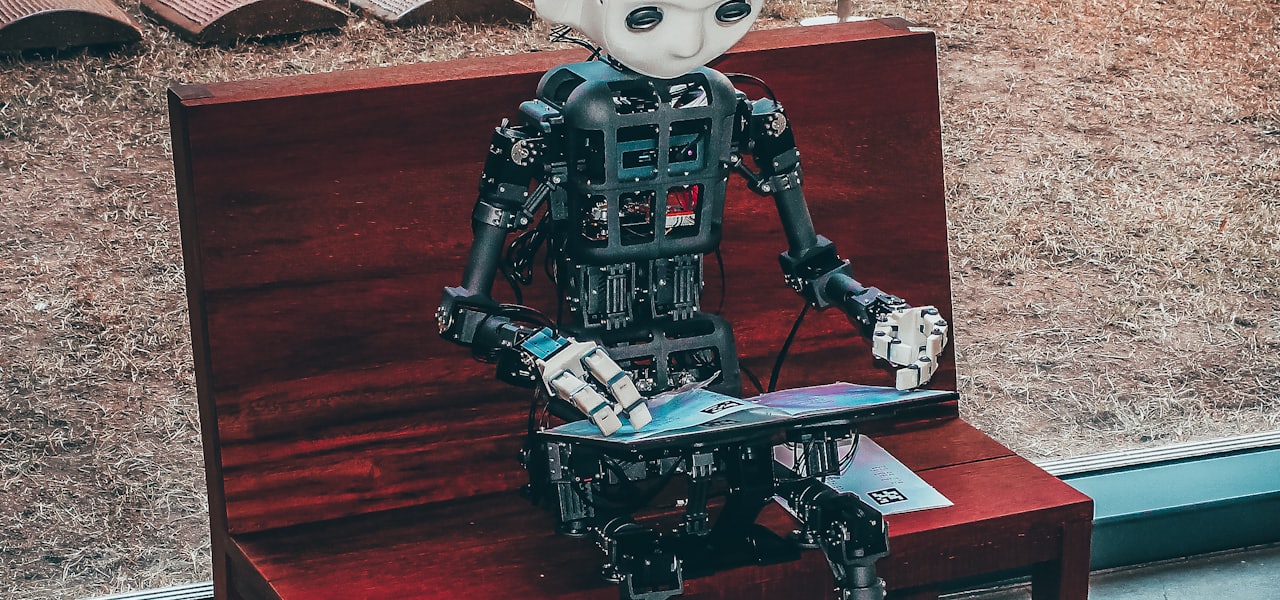
Sora was a text-to-video model and social media app developed by OpenAI. Using artificial intelligence, the model generated short video clips based on prompts, and could also extend existing short videos. In February 2024, OpenAI previewed examples of its output to the public, with the first generation of Sora released publicly for ChatGPT Plus and ChatGPT Pro users in the United States and Canada in December 2024. The second generation of Sora was released to select users in the US and Canada at the end of September 2025. Sora 2 integrated social media features into the app. The app was shut down on April 26, 2026 and the application programming interface (API) is planned to be discontinued on September 24, 2026, marking the end of the Sora AI brand as a whole. By default, the generator used copyrighted material in its videos, unless copyright holders actively opt out of having their content included. Videos contained a visible, moving digital watermark to prevent misuse, but a week after Sora 2's release, third-party programs became available which could remove the watermark. == Background == Several other models capable of generating video from text had been created prior to Sora, including Meta's Make‑A‑Video, Runway's Gen‑2 and Google Veo. OpenAI, the company behind Sora, had released DALL·E 3, the third of its DALL-E text-to-image models, in September 2023. == History == === Initial release === The team that developed Sora named it after the Japanese word for 'sky' to signify its "limitless creative potential". On February 15, 2024, OpenAI first previewed Sora by releasing multiple clips of high-definition videos that it had created, including an SUV driving down a mountain road, an animation of a "short fluffy monster" next to a candle, two people walking through Tokyo in the snow, and fake historical footage of the California gold rush. OpenAI stated that it was able to generate videos as long as one minute. The company then shared a technical report that highlighted the methods used to train the model. OpenAI CEO Sam Altman also posted a series of tweets responding to Twitter users' prompts with Sora-generated videos of the prompts. As of December 9, 2024, OpenAI had gradually made Sora available to the public for ChatGPT Pro and ChatGPT Plus users in the U.S. and Canada. Prior to this, the company had provided limited access to a small "red team", including experts in misinformation and bias, to perform adversarial testing on the model. The company also shared Sora with a small group of creative professionals, including video makers and artists, to seek feedback on its usefulness in creative fields. In February 2025, OpenAI announced plans to integrate Sora into ChatGPT by letting users generate Sora videos from the chatbot. === Sora 2 === Sora 2 was unveiled on September 30, 2025, with an iOS app at the same time, as well as an Android app two months later. All videos generated by the model feature a visible, moving watermark to prevent misuse of the tool. The previous version of Sora also added a safety watermark to allow viewers to distinguish between real and fictional content. On October 7, 404 Media reported that third-party programs that could remove the watermark from Sora 2 videos had become prevalent. Many outlets, such as Wired magazine, have noted that the Sora 2 app is overtly similar to TikTok in style and features. === Discontinuation === On March 24, 2026, OpenAI announced on X that it was discontinuing Sora in both the mobile app and the API. The Sora app was shut down on April 26, 2026, while the API is planned to be shut down on September 24, 2026. OpenAI's partnership with Disney, which included a licensing agreement allowing Disney characters to be used within Sora, was also coming to an end. The decision prompted British technology news website The Register to label OpenAI a "product-killer", following in the footsteps of other technology companies such as Google, Amazon Web Services, Broadcom, Cloud Software Group, and Netscape. OpenAI did not provide a specific reason for discontinuing Sora in its shutdown notice. The reports that emerged regarding this discontinuity linked the decision to computation shortages, cost pressures, and a broader shift toward core enterprise products. Following its public launch, Sora's worldwide users peaked at around a million before declining to fewer than 500,000, while the service cost an estimated $1 million per day to operate due to the computational demands of video generation. == Legal regulation == In November 2024, an API key for Sora access was leaked by a group of testers on Hugging Face who posted a manifesto stating that they were protesting that Sora was used for "art washing". OpenAI revoked all access three hours after the leak was made public and stated that "hundreds of artists" have shaped the development and that "participation is voluntary". At the time of its launch, Sora 2 allowed copyrighted content by default unless copyright holders contacted OpenAI to restrict the generation of their content on the platform. On October 3, 2025, OpenAI stated that a future update to Sora 2 would give copyright holders "more granular control" over the generation of copyrighted content, but the company did not state whether existing content would be removed. On October 6, the chairman of the MPA criticized OpenAI's approach to copyright with Sora 2. On December 11, 2025, the Walt Disney Company announced that it would invest $1 billion in OpenAI to allow users to generate more than 200 of its copyrighted characters on Sora 2. These characters include those from Disney Animation, Pixar, Marvel Studios, and Star Wars. == Capabilities and limitations == The technology behind Sora is an adaptation of the technology behind DALL-E 3. According to OpenAI, Sora is a diffusion transformer, a denoising latent diffusion model with one transformer as its denoiser. A video is generated in latent space by denoising 3D "patches", then transformed to standard space by a video decompressor. Recaptioning is employed to augment training data by using a video-to-text model to create detailed captions for videos. OpenAI trained the model using publicly available videos as well as copyrighted videos licensed for the purpose, but did not reveal the number or the exact source of the videos. Upon its release, OpenAI acknowledged some of Sora's shortcomings, including its limited capacity to simulate complex physics, to understand causality and to differentiate left from right. OpenAI also stated that, in adherence to the company's existing safety practices, Sora will restrict text prompts for sexual, violent, hateful or celebrity imagery, as well as content featuring existing intellectual property. Sora researcher Tim Brooks stated that the model learned how to create 3D graphics from its dataset alone, while fellow Sora researcher Bill Peebles said that the model automatically created different video angles without being prompted. According to OpenAI, Sora-generated videos are also tagged with C2PA metadata to indicate that they are AI-processed. === Comparison with other models === The Artificial Analysis have placed Sora 2 pro lower than other text-to-video AI generators in the market on its leaderboard. Other models, such as Seedance 2.0 from ByteDance, Runaway 4.5 from Runaway, and Kling 3.0 from KlingAI, have ranked higher than Sora 2.0. == Reception == === Positive === In 2024, Will Douglas Heaven of the MIT Technology Review called the demonstration videos "impressive", but noted that they must have been cherry-picked and may not be representative of Sora's typical output. Lisa Lacy of CNET called its example videos "remarkably realistic – except perhaps when a human face appears close up or when sea creatures are swimming". In October 2025, The New York Times remarked that the release of the Sora 2 app in September 2025 was "jaw-dropping (for better and worse)" though also remarked that the app was a "social network in disguise" and "the type of product that companies like Meta and X have sought to build: a way to bring A.I. to the masses that people can share." The article expressed concern regarding the product's potential impact on society and its potential use to promote misinformation, disinformation, and scams. A 2025 study in Science Advances found that generative AI tools can lower barriers to entry in creative work. It enables users with diverse skill sets, including people with less formal artistic training and technical skills, to act on their creative and imaginative ideas. The lower barrier to entry allows such users previously locked out of the creative industry to produce content and easily act on their creative ideas. === Negative === Some internet users and online content creators, such as Hank Green, called the mobile app "SlopTok," a reference to both the mobile app TikTok and the term AI slop. Filmmaker Tyler Perry announced he would be putting a planned
Fyre (software)
Fyre, formerly de Jong Explorer, is a cross-platform tool for producing artwork based on histograms of iterated chaotic functions. It implements the Peter de Jong map in a fixed function pipeline through either a GTK GUI frontend, or a command line facility for easier rendering of high-resolution, high quality images. The program was renamed from de Jong Explorer to Fyre simply because 'It wasn't taken yet' and so that in the future, it could support more functions than just the standard Peter de Jong map. Fyre features a sidebar on the left to which the user can input the required variables and on the right is displayed the result of the equation. == Extra features == Additional image manipulation tools such as Gaussian blurs and Gamma controls are included in the program. The advantage to using them directly within Fyre is that the image accuracy and quality do not decline. Fyre features animation capabilities so that a user can link together several maps and create uncompressed AVIs from them. However, the uncompressed animation files are very large and so should be compressed with a separate tool, such as mencoder. == Peter de Jong Map == For most values of a,b,c and d the point (x,y) moves chaotically. The resulting image is a map of the probability that the point lies within the area represented by each pixel. Therefore, the longer that the user lets Fyre render for, the larger the probability map becomes and the more accurate the resulting image.
NETtalk (artificial neural network)
NETtalk is an artificial neural network that learns to pronounce written English text by supervised learning. It takes English text as input, and produces a matching phonetic transcriptions as output. It is the result of research carried out in the mid-1980s by Terrence Sejnowski and Charles Rosenberg. The intent behind NETtalk was to construct simplified models that might shed light on the complexity of learning human level cognitive tasks, and their implementation as a connectionist model that could also learn to perform a comparable task. The authors trained it by backpropagation. The network was trained on a large amount of English words and their corresponding pronunciations, and is able to generate pronunciations for unseen words with a high level of accuracy. The output of the network was a stream of phonemes, which fed into DECtalk to produce audible speech. It achieved popular success, appearing on the Today show. From the point of view of modeling human cognition, NETtalk does not specifically model the image processing stages and letter recognition of the visual cortex. Rather, it assumes that the letters have been pre-classified and recognized. It is NETtalk's task to learn proper associations between the correct pronunciation with a given sequence of letters based on the context in which the letters appear. A similar architecture was subsequently used for the opposite task, that of converting continuous speech signal to a phoneme sequence. == Training == The training dataset was a 20,008-word subset of the Brown Corpus, with manually annotated phoneme and stress for each letter. The development process was described in a 1993 interview. It took three months -- 250 person-hours -- to create the training dataset, but only a few days to train the network. After it was run successfully on this, the authors tried it on a phonological transcription of an interview with a young Latino boy from a barrio in Los Angeles. This resulted in a network that reproduced his Spanish accent. The original NETtalk was implemented on a Ridge 32, which took 0.275 seconds per learning step (one forward and one backward pass). Training NETtalk became a benchmark to test for the efficiency of backpropagation programs. For example, an implementation on Connection Machine-1 (with 16384 processors) ran at 52x speedup. An implementation on a 10-cell Warp ran at 340x speedup. The following table compiles the benchmark scores as of 1988. Speed is measured in "millions of connections per second" (MCPS). For example, the original NETtalk on Ridge 32 took 0.275 seconds per forward-backward pass, giving 18629 / 10 6 0.275 = 0.068 {\displaystyle {\frac {18629/10^{6}}{0.275}}=0.068} MCPS. Relative times are normalized to the MicroVax. == Architecture == The network had three layers and 18,629 adjustable weights, large by the standards of 1986. There were worries that it would overfit the dataset, but it was trained successfully. The input of the network has 203 units, divided into 7 groups of 29 units each. Each group is a one-hot encoding of one character. There are 29 possible characters: 26 letters, comma, period, and word boundary (whitespace). To produce the pronunciation of a single character, the network takes the character itself, as well as 3 characters before and 3 characters after it. The hidden layer has 80 units. The output has 26 units. 21 units encode for articulatory features (point of articulation, voicing, vowel height, etc.) of phonemes, and 5 units encode for stress and syllable boundaries. Sejnowski studied the learned representation in the network, and found that phonemes that sound similar are clustered together in representation space. The output of the network degrades, but remains understandable, when some hidden neurons are removed.
Neural gas
Neural gas is an artificial neural network, inspired by the self-organizing map and introduced in 1991 by Thomas Martinetz and Klaus Schulten. The neural gas is a simple algorithm for finding optimal data representations based on feature vectors. The algorithm was coined "neural gas" because of the dynamics of the feature vectors during the adaptation process, which distribute themselves like a gas within the data space. It is applied where data compression or vector quantization is an issue, for example speech recognition, image processing or pattern recognition. As a robustly converging alternative to the k-means clustering it is also used for cluster analysis. == Algorithm == Suppose we want to model a probability distribution P ( x ) {\displaystyle P(x)} of data vectors x {\displaystyle x} using a finite number of feature vectors w i {\displaystyle w_{i}} , where i = 1 , ⋯ , N {\displaystyle i=1,\cdots ,N} . For each time step t {\displaystyle t} Sample data vector x {\displaystyle x} from P ( x ) {\displaystyle P(x)} Compute the distance between x {\displaystyle x} and each feature vector. Rank the distances. Let i 0 {\displaystyle i_{0}} be the index of the closest feature vector, i 1 {\displaystyle i_{1}} the index of the second closest feature vector, and so on. Update each feature vector by: w i k t + 1 = w i k t + ε ⋅ e − k / λ ⋅ ( x − w i k t ) , k = 0 , ⋯ , N − 1 {\displaystyle w_{i_{k}}^{t+1}=w_{i_{k}}^{t}+\varepsilon \cdot e^{-k/\lambda }\cdot (x-w_{i_{k}}^{t}),k=0,\cdots ,N-1} In the algorithm, ε {\displaystyle \varepsilon } can be understood as the learning rate, and λ {\displaystyle \lambda } as the neighborhood range. ε {\displaystyle \varepsilon } and λ {\displaystyle \lambda } are reduced with increasing t {\displaystyle t} so that the algorithm converges after many adaptation steps. The adaptation step of the neural gas can be interpreted as gradient descent on a cost function. By adapting not only the closest feature vector but all of them with a step size decreasing with increasing distance order, compared to (online) k-means clustering a much more robust convergence of the algorithm can be achieved. The neural gas model does not delete a node and also does not create new nodes. === Comparison with SOM === Compared to self-organized map, the neural gas model does not assume that some vectors are neighbors. If two vectors happen to be close together, they would tend to move together, and if two vectors happen to be apart, they would tend to not move together. In contrast, in an SOM, if two vectors are neighbors in the underlying graph, then they will always tend to move together, no matter whether the two vectors happen to be neighbors in the Euclidean space. The name "neural gas" is because one can imagine it to be what an SOM would be like if there is no underlying graph, and all points are free to move without the bonds that bind them together. == Variants == A number of variants of the neural gas algorithm exists in the literature so as to mitigate some of its shortcomings. More notable is perhaps Bernd Fritzke's growing neural gas, but also one should mention further elaborations such as the Growing When Required network and also the incremental growing neural gas. A performance-oriented approach that avoids the risk of overfitting is the Plastic Neural gas model. === Growing neural gas === Fritzke describes the growing neural gas (GNG) as an incremental network model that learns topological relations by using a "Hebb-like learning rule", only, unlike the neural gas, it has no parameters that change over time and it is capable of continuous learning, i.e. learning on data streams. GNG has been widely used in several domains, demonstrating its capabilities for clustering data incrementally. The GNG is initialized with two randomly positioned nodes which are initially connected with a zero age edge and whose errors are set to 0. Since in the GNG input data is presented sequentially one by one, the following steps are followed at each iteration: It is calculating the errors (distances) between the two closest nodes to the current input data. The error of the winner node (only the closest one) is respectively accumulated. The winner node and its topological neighbors (connected by an edge) are moving towards the current input by different fractions of their respective errors. The age of all edges connected to the winner node are incremented. If the winner node and the second-winner are connected by an edge, such an edge is set to 0. Else, an edge is created between them. If there are edges with an age larger than a threshold, they are removed. Nodes without connections are eliminated. If the current iteration is an integer multiple of a predefined frequency-creation threshold, a new node is inserted between the node with the largest error (among all) and its topological neighbor presenting the highest error. The link between the former and the latter nodes is eliminated (their errors are decreased by a given factor) and the new node is connected to both of them. The error of the new node is initialized as the updated error of the node which had the largest error (among all). The accumulated error of all nodes is decreased by a given factor. If the stopping criterion is not met, the algorithm takes a following input. The criterion might be a given number of epochs, i.e., a pre-set number of times where all data is presented, or the reach of a maximum number of nodes. === Incremental growing neural gas === Another neural gas variant inspired by the GNG algorithm is the incremental growing neural gas (IGNG). The authors propose the main advantage of this algorithm to be "learning new data (plasticity) without degrading the previously trained network and forgetting the old input data (stability)." === Growing when required === Having a network with a growing set of nodes, like the one implemented by the GNG algorithm was seen as a great advantage, however some limitation on the learning was seen by the introduction of the parameter λ, in which the network would only be able to grow when iterations were a multiple of this parameter. The proposal to mitigate this problem was a new algorithm, the Growing When Required network (GWR), which would have the network grow more quickly, by adding nodes as quickly as possible whenever the network identified that the existing nodes would not describe the input well enough. === Plastic neural gas === The ability to only grow a network may quickly introduce overfitting; on the other hand, removing nodes on the basis of age only, as in the GNG model, does not ensure that the removed nodes are actually useless, because removal depends on a model parameter that should be carefully tuned to the "memory length" of the stream of input data. The "Plastic Neural Gas" model solves this problem by making decisions to add or remove nodes using an unsupervised version of cross-validation, which controls an equivalent notion of "generalization ability" for the unsupervised setting. While growing-only methods only cater for the incremental learning scenario, the ability to grow and shrink is suited to the more general streaming data problem. == Implementations == To find the ranking i 0 , i 1 , … , i N − 1 {\displaystyle i_{0},i_{1},\ldots ,i_{N-1}} of the feature vectors, the neural gas algorithm involves sorting, which is a procedure that does not lend itself easily to parallelization or implementation in analog hardware. However, implementations in both parallel software and analog hardware were actually designed.
Tanagra (machine learning)
Tanagra is a free suite of machine learning software for research and academic purposes developed by Ricco Rakotomalala at the Lumière University Lyon 2, France. Tanagra supports several standard data mining tasks such as: Visualization, Descriptive statistics, Instance selection, feature selection, feature construction, regression, factor analysis, clustering, classification and association rule learning. Tanagra is an academic project. It is widely used in French-speaking universities. Tanagra is frequently used in real studies and in software comparison papers. == History == The development of Tanagra was started in June 2003. The first version was distributed in December 2003. Tanagra is the successor of Sipina, another free data mining tool which is intended only for supervised learning tasks (classification), especially the interactive and visual construction of decision trees. Sipina is still available online and is maintained. Tanagra is an "open source project" as every researcher can access the source code and add their own algorithms, as long as they agree and conform to the software distribution license. The main purpose of the Tanagra project is to give researchers and students a user-friendly data mining software, conforming to the present norms of the software development in this domain (especially in the design of its GUI and the way to use it), and allowing the analyzation of either real or synthetic data. From 2006, Ricco Rakotomalala made an important documentation effort. A large number of tutorials are published on a dedicated website. They describe the statistical and machine learning methods and their implementation with Tanagra on real case studies. The use of other free data mining tools on the same problems is also widely described. The comparison of the tools enables readers to understand the possible differences in the presentation of results. == Description == Tanagra works similarly to current data mining tools. The user can design visually a data mining process in a diagram. Each node is a statistical or machine learning technique, the connection between two nodes represents the data transfer. But unlike the majority of tools which are based on the workflow paradigm, Tanagra is very simplified. The treatments are represented in a tree diagram. The results are displayed in an HTML format. This makes it is easy to export the outputs in order to visualize the results in a browser. It is also possible to copy the result tables to a spreadsheet. Tanagra makes a good compromise between statistical approaches (e.g. parametric and nonparametric statistical tests), multivariate analysis methods (e.g. factor analysis, correspondence analysis, cluster analysis, regression) and machine learning techniques (e.g. neural network, support vector machine, decision trees, random forest).
MY F.C.
MY F.C. is a freemium app designed to organise and administer football teams. It is developed by MY F.C. Limited, a private company headquartered in Auckland, New Zealand. The app allows users to build a team by adding players and from there they can create trainings and matches, keep up with relevant news in the curated newsfeed, record statistics both individually and team based, follow the games live in the match-centre. The app also features integrated lineup builder with custom team kits. == History == Founders Sam Jenkins, Mike Simpson and Sam Jasper started MY F.C. in 2015 to help them "run their football lives". The app was launched on Android and iOS on 14 February 2017. == Accolades == MY F.C. won the first place prize at Bank of New Zealand Start-up Alley 2017 competition that aims to discover New Zealand start-ups who are doing innovative work and ready to establish themselves as long-term, sustainable businesses. The prize package included $15,000 and a trip to San Francisco.
Teaching dimension
In computational learning theory, the teaching dimension of a concept class C is defined to be max c ∈ C { w C ( c ) } {\displaystyle \max _{c\in C}\{w_{C}(c)\}} , where w C ( c ) {\displaystyle {w_{C}(c)}} is the minimum size of a witness set for c in C. Intuitively, this measures the number of instances that are needed to identify a concept in the class, using supervised learning with examples provided by a helpful teacher who is trying to convey the concept as succinctly as possible. This definition was formulated in 1995 by Sally Goldman and Michael Kearns, based on earlier work by Goldman, Ron Rivest, and Robert Schapire. The teaching dimension of a finite concept class can be used to give a lower and an upper bound on the membership query cost of the concept class. In Stasys Jukna's book "Extremal Combinatorics", a lower bound is given for the teaching dimension in general: Let C be a concept class over a finite domain X. If the size of C is greater than 2 k ( | X | k ) , {\displaystyle 2^{k}{|X| \choose k},} then the teaching dimension of C is greater than k. However, there are more specific teaching models that make assumptions about teacher or learner, and can get lower values for the teaching dimension. For instance, several models are the classical teaching (CT) model, the optimal teacher (OT) model, recursive teaching (RT), preference-based teaching (PBT), and non-clashing teaching (NCT).